

Tristan Snell, lawyer + media figure
We are in a second gilded age and this one is worse than the first one

Welcome to What’s Left! I’m Amy Hoggart, a writer/comedian with the ideals of a radical but the risk-aversion of a moderate. Each week, I interview someone interesting about their personal politics and the state of the left today.
If you’re enjoying these conversations, please consider becoming a paid subscriber! This is a beautiful but also a time-intensive project, and I’ve kept the costs low to be accessible. Upgrading means you’ll get video and audio versions of the interviews every week, access to the whole archive of past interviews and the knowledge that you’re supporting my work 🧡.

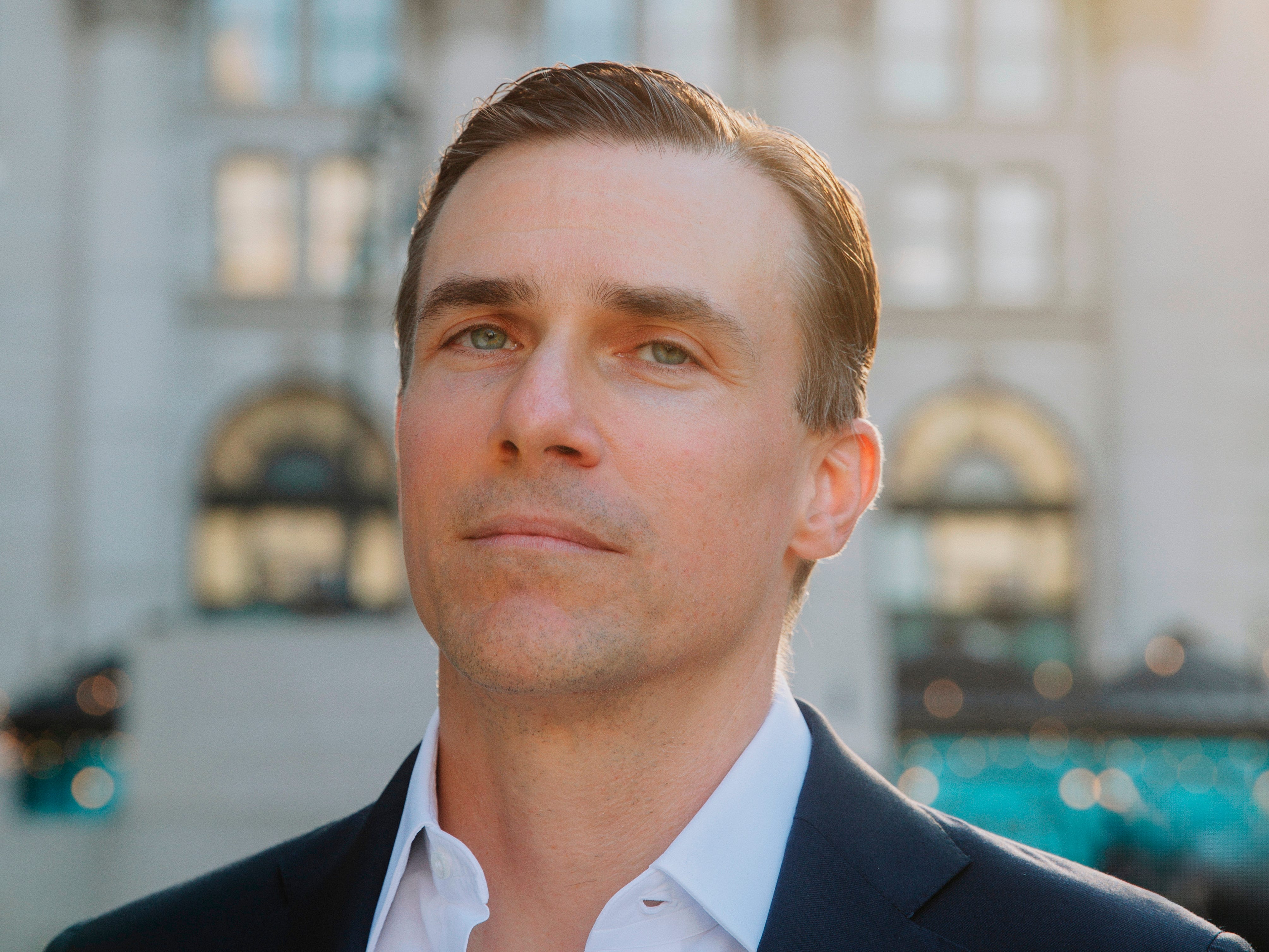
Tristan Snell is a nationally renowned lawyer, as well as the founder and managing partner of MainStreet.Law, a full-spectrum law firm focused on tech and media. Formerly the lead prosecutor on the NY AG’s successful case against Trump University, and now a commentator featured on MSNBC, CNN, NPR, and in the Wall Street Journal and the Washington Post; he is also one of the top legal commentators online, with over 1.1 million followers and the #2 legal podcast on Apple. Check out his substack here!
Watch/listen to our whole chat here!
Hi Tristan, thanks for joining me.
Hi, Amy. I’m a huge fan of your past work. I was very delighted to hear from you.
Thanks so much! Ok, I have to admit now that Tristan said that before we started recording, and I asked him why he hadn’t waited until after we’d started. So then he immediately said it again on camera, which I really, really appreciate.
That’s true.
I’m clearly a big fan of your work, hence why I reached out to you. Now that the compliments are out of the way, here’s the first question I always ask everyone: if there was a version of the political spectrum where zero means you’re a total centrist, -100 a complete fascist, and then + 100, a radical leftist, where would you put yourself?
I would probably put myself at +70 or 80.
Oh wow, really progressive!
Honestly, I’ve moved more to the left as I’ve gotten older. But I will say that I believe a lot of how we think about the left is a bit out of date and a bit broken. We need to rethink that.
Can you elaborate?
I was pacing around my office space in New York at three in the morning on election night 2024, screaming at the top of my lungs. What I couldn’t get was how in Missouri, there was a referendum for a $15 minimum wage that passed with flying colours. And yet the state went double digits for Republicans. I was like, ‘How are we blowing this?’
If our policies are the ones that a lot of people—even people we might consider right-wing—actually want, and yet we are somehow not winning elections when it’s a person rather than a position on the ballot, what are we doing wrong in American centre-left politics? What’s the Democratic Party doing wrong?
We have to come up with a much more populist, fully 50-state version of what it means to be progressive, and possibly just use slightly different words in framing. A lot of it is about framing, messaging and messenger issues.
I say I’m at a +70 or +80, but I actually consider a lot of my views to be closer to the mainstream of what a lot of people think.
I don’t think that there is a party or a candidate expressing what a lot of people in the country are thinking right now. Even some of the people who voted for Trump could be reached with a better party message and messenger.
So are you saying this is a communication problem?
Overall, there is definitely a massive messaging and communication problem. I think policy-wise, the progressive agenda isn’t perfect, but it is mostly on point. But right now, too much of Democratic politics in America flows through a standard set of tools that are predominantly driven around television. And increasingly, that’s just not working. It is very top-down. There’s a playbook they follow and they keep following it, even though the other side changed their playbook.
What is with my ego?! For more cringe moments from my end, check out our whole conversation in the video post here!
So what do the Dems need to do differently?
Digital media is not just traditional media on a smaller screen. Digital media is its own thing. I’ve thought about and written about that a lot.
I think it’s tougher for older politicians; I think they really don’t know what to do and most of them don’t pull it off. The weird exception to this is Bernie. My theory is that Bernie never would have become who he became in the traditional TV era. They would have said, ‘Who’s this crazy guy?! We’re not going to give him airtime.’
But the fact that he could go around TV and go directly to supporters changed everything. Trump also never would have made it with his tone and belligerence if mainstream media had more confidence in itself. But they were desperate for ratings and the fact that he could make himself relevant just by going onto Twitter made him someone they couldn’t ignore.
The move to digital opened the door for a different style of communication that even some older politicians could use. But overwhelmingly it’s going to be the younger generation—people like Mamdani or AOC—who pick this up and really change politics with it.
Unfortunately, there are a lot of folks on the right doing the same thing.
If they made The West Wing now, they’d need a whole team whose job is turning politicians into influencers.
A hundred percent. Most politicians need that because they can’t do it on their own. They probably don’t have the skills, and it takes a huge amount of time.
So let’s take it back to your upbringing: when did you get into this stuff?
My interest in politics has been a lifelong thing. It was probably clear from about age six that I found all of this fascinating. I grew up in Virginia and worked on a gubernatorial campaign, and as soon as I became an independent adult, I signed up to volunteer. Then I interned at the White House the next summer. It was the summer of 1998, so I was there when the Lewinsky scandal boiled over.
Oh wow!
I was 20 and working in the West Wing in the communications office. It was my job to answer the phone, occasionally get yelled at, and support senior White House staffers. I remember thinking, How did I get here? This is crazy.
I was more disillusioned after that summer. That was around the point where I thought I’d do journalism or become a history professor because I wanted to be near the system but not in it, at least for a while.
Then I eventually got more involved again. I can’t help it, I’m obsessed. For me, it’s always been about figuring out where I fit in and where I can add value and make a difference.
So do you think the Lewinsky scandal, and how it was handled, pushed you a bit out of politics for a while then?
Maybe a bit. It didn’t push me out entirely, but I do think I became more jaded. I still think I’ll be more involved in the future. I’m trying to figure out where that fits.
Could it mean running for office someday?
Maybe.
Watch this space!
I’ve had a long love-jaded relationship with American politics and Democratic politics. There’s a lot to criticise, but I keep coming back.
So what would you say to the anarchist perspective that institutions are rotten and beyond repair?
I’m not an anarchist, but I have moved toward being a very upset populist. That’s how I would categorise myself: a populist progressive Democrat.
To me, populism is about taking power back from corrupt institutions and corrupt elites who are running the country and, increasingly, large parts of the world. We’re at a point where a small handful of extremely powerful individuals control enormous amounts of wealth and influence. That’s a global problem. The American business system has concentrated power and wealth in the hands of very few people.
It’s not really capitalism anymore: it’s a corporatist oligopoly.
You think that’s separate from capitalism?
It’s what capitalism can devolve into if left unchecked.
Aha.
Some people would argue it’s the natural end state of capitalism, but others would say regulation can prevent that. I believe there have to be checks on the system because capitalism requires competition, because without competition, it stops being capitalism.
What we have now is not an open competitive system. It’s increasingly controlled by a small number of powerful figures and only a tiny handful of people have outsized influence. There’s also a culture of elite protection and exclusivity that reinforces that power structure.
That critique has come from the right for more than a decade, and now we’re seeing space for a populist message that could potentially appeal across political divides. And we’re only at the beginning of that.
The populist position isn’t to burn the system down: that would be anarchism. Populism says the system can be redeemed if power is taken back and anarchism says the system was irredeemable from the start.
So are you essentially saying “drain the swamp”?!
I mean, look, I’ve felt this way for a long time, but it’s hardened with recent events. A lot of institutions that were supposed to stop corruption failed and the leadership class is broken. Even many people who were supposed to be trustworthy turned out to be corrupt or abusive.
But we are living in a second Gilded Age.
Uh oh.
But worse than the first.
Great.
We’re living in a period similar to the late 1800s.
I do believe there could be a progressive counter-movement eventually, so there is hope, but it won’t happen quickly. I believe the system is redeemable, but it is deeply broken.
One of my favourite things about these interviews is being surprised by my guests. Because you were a prosecutor, I really didn’t expect this direction at all.
People mostly know me for the prosecution work and covering Trump-related cases. But part of what changed me was the last few years. Our justice system failed in ways I didn’t expect; I truly believed we would win those legal battles. I wrote in my book epilogue in late 2023 that I believed Trump would likely be convicted of felonies in 2024.
Oh dear.
He was indicted, but ultimately avoided consequences. I underestimated the depth of corruption and the timidity of people who could have acted more decisively, but who didn’t move fast enough or aggressively enough. That allowed the situation to unfold the way it did and that made me far more jaded.
So for you, this is like Lewinsky again, but much, much bigger.
This is vastly bigger; this is on a completely different scale.
Do you have hope that it will change? Not just that it could?
Look, I was so wrong about how things were going to go in 2024 with those prosecutions. But even though it blew up in my face, I am still an optimist. I guess I’m just wired this way; I still believe that there is a light at the end of this tunnel.
I think Trump’s failing so rapidly in real time right now that he’s kind of doing himself in. It’s not because anybody’s really opposing him super effectively because, with a tiny handful of individual exceptions, he’s not being opposed very effectively. He’s an absolutely devilishly good campaigner, but a hilariously terrible governor of anything.
But in terms of the bigger picture—and getting back to the Gilded Age bit—is that I do believe that the pendulum is going to swing. I think people are getting so upset with the corruption and with how much they got lied to.
I follow a lot of these MAGA folks just to see what they’re saying. So many of them are completely done with Trump, and this is not a momentary thing. It’s not all of them, but there’s a louder and louder set of voices that believe that he sold them out. He was supposed to be there for the people: with lower costs and no more wars.
I think that awareness of what has happened is going to crystallise for more people and that we will start to see more of a reform movement that might even be somewhat bipartisan.
I’ll nerd it up even more.
Great!
We’re now getting to a point like in the late 1800s, where both parties have a rebellious reformist movement inside them. That is new. Before, only the Democrats really had that, now the Republicans are building one too. And it’s happening in real time.
I believe we’re getting to a place of broader consciousness about what’s going wrong. It may take quite a long time for that to translate into a really different version of American government, but I do think it’s going to happen. I don’t know if it will take five years, 10 years, or 25 years, but I do think that 2050 America will hopefully look a lot better than 2025 or 2026 America. That’s my hope.
I love to hear this. Of course we can’t predict anything, but I appreciate that you are offering some glimmers of optimism.
There’s that. As somebody said to me the other day, it’s possible that some political outcomes might happen by default rather than deliberate success.
Thank you so much, Tristan! This has been such a good chat.
Thank you. Thanks for having me on.
Don’t forget to watch and listen here!
And then definitely subscribe to Tristan’s own newsletter!


